The right medical receptionist interview questions and answers tell you far more than a CV ever will. A candidate can list “excellent communication skills” and still freeze when a patient’s medical aid rejects a claim at the counter. This guide gives you the questions worth asking, what a strong answer sounds like, and the red flags to listen for.
Most practices hire on personality and hope the rest can be taught. Personality matters, but the front desk is also where your billing starts, where patient information is most exposed and where your day either flows or falls apart. A poor hire shows up as double-booked slots, unpaid accounts and patients who quietly stop coming back.
So we’ll keep this practical. You’ll get scenario questions, the answers that signal competence, and a few ways to test candidates beyond conversation.
Questions to Ask a Medical Receptionist Candidate
Skip the textbook openers like “Where do you see yourself in five years?” They produce rehearsed answers. Ask for specific past situations instead, because behaviour in the past predicts behaviour at your desk.
Start with the phones and the waiting room. Ask: “Tell me about a time a patient was angry at the counter. What did you say and what happened next?” A strong answer names a real situation, shows the candidate stayed calm, and ends with a practical fix rather than an apology alone. Be wary of anyone who blames the patient entirely, or who says they never face difficult people.
Next, test judgement under pressure. Try: “You have a patient with chest pain at the counter, a full waiting room and the doctor is with another patient. What do you do?” You want to hear that they’d alert the doctor or clinical staff immediately, not wait for a convenient gap. This question separates people who understand triage from those who just process queues.
Then probe the money side. Ask: “A patient says their medical aid will pay, but you’ve just found the authorisation has lapsed. How do you handle it?” Good candidates talk about checking benefits before the visit, explaining the situation plainly and agreeing a payment arrangement without embarrassing the patient. If you’d like a wider view of how scheduling pressure plays out, Physicians Practice’s guide to open access scheduling shows why setting clear service promises to patients prevents so many front desk arguments.
Finally, ask about mistakes: “Describe an error you made at work and how you caught it.” The best receptionists report their own slips quickly. The dangerous ones hide them, and in a medical practice a hidden error can be a wrong patient file or a claim submitted twice.
Medical Receptionist Skills and Qualities Worth Hiring For
Some skills can be taught in a fortnight. Others can’t. Learning your booking system is trainable; staying composed when three phones ring at once mostly isn’t.
Look first for composure and tact. Your receptionist is the first and last person patients deal with, often when they’re frightened, in pain or worried about cost. Listen for how candidates speak about patients in their past jobs. Contempt is hard to hide.
Accuracy comes next. Ask a candidate to read back a booking you dictate: a name with an unusual spelling, an ID number, a cellphone number. One transposed digit on a medical aid number can mean a rejected claim weeks later. A short data-entry test of ten minutes will tell you more than any reference.
Confidentiality is non-negotiable, and here your questions need teeth. Ask: “A woman phones and says she’s a patient’s sister and wants to know why he was in last week. What do you say?” The only acceptable answer is that you can’t confirm or discuss anything without the patient’s consent. Under South Africa’s Protection of Personal Information Act, health information is special personal information, and the Information Regulator oversees how it’s handled. For a deeper look at what this means in clinical settings, the South African Medical Journal’s article on the POPI Act and healthcare professionals is a useful read for your team.
Follow up with a practical scenario about patient confidentiality and POPIA: a patient file left open on a screen, a fax sent to the wrong number, a WhatsApp message with a patient’s results. Strong candidates spot the risk without prompting. They also know the answer isn’t always “refuse”; sometimes it’s “verify identity first, then proceed.”
Last, look for a person who writes things down properly. Reception staff often capture notes about calls, referrals and payments, and good records are factual, dated and never altered by deleting the original. The Medical Protection Society’s record keeping guidance puts it well: corrections should be dated and signed, with the original left visible. Ask candidates how they’d fix a wrong entry. Anyone who says “I’d just delete it” needs coaching.
How to Hire a Medical Receptionist in South Africa
Hiring locally has its own wrinkles, and it pays to get the process right before the first interview.
Write a job advert that describes the actual work. “Friendly receptionist wanted” attracts everyone; “Receptionist for a three-doctor GP practice, handling bookings, medical aid verification and patient accounts” attracts people who’ve done it. State the hours, any Saturday duty and the software they’ll use. Candidates who’ve worked on a modern system will say so, and those who haven’t can be honest about their learning curve.
Shortlist on evidence of relevant experience, then run a two-stage interview. The first is a short phone screen of fifteen minutes to check communication and availability. The second is in person, with a practical task: take a mock phone booking, capture a new patient’s details and explain a simple account to a “patient.” Involve your practice manager and, if you can, a senior nurse. They notice different things from you.
Check references properly. Phone the previous practice and ask specifically about reliability, handling of confidential information and how the person dealt with conflict. Verify qualifications where they matter, and remember that clinical registration with the Health Professions Council of South Africa applies to practitioners rather than reception staff, so don’t let a candidate imply otherwise. What you can reasonably require is a signed confidentiality agreement and a POPIA induction on day one.
Then test medical aid and billing knowledge, because this is where South African practices lose the most money. Ask candidates to explain the difference between a scheme rate and a private rate, what a co-payment is, or why a claim might be rejected for an invalid dependant code. Better still, ask whether they know what Prescribed Minimum Benefits are; the Council for Medical Schemes explains PMBs and a candidate who has at least heard of them is ahead of the pack. Industry data suggests that a large share of claim rejections trace back to simple capture errors at registration, so a receptionist who checks details twice is worth real money.
Finally, structure a probation period of three months with clear targets: fewer rejected claims, accurate bookings, a tidy waiting room. Review at four weeks, not at the end.
Where GoodX Fits Into Your Front Desk Hiring
Even a brilliant hire struggles with clumsy tools. Front desk practice management works best when the software removes repetitive checking so your receptionist can spend time on patients.
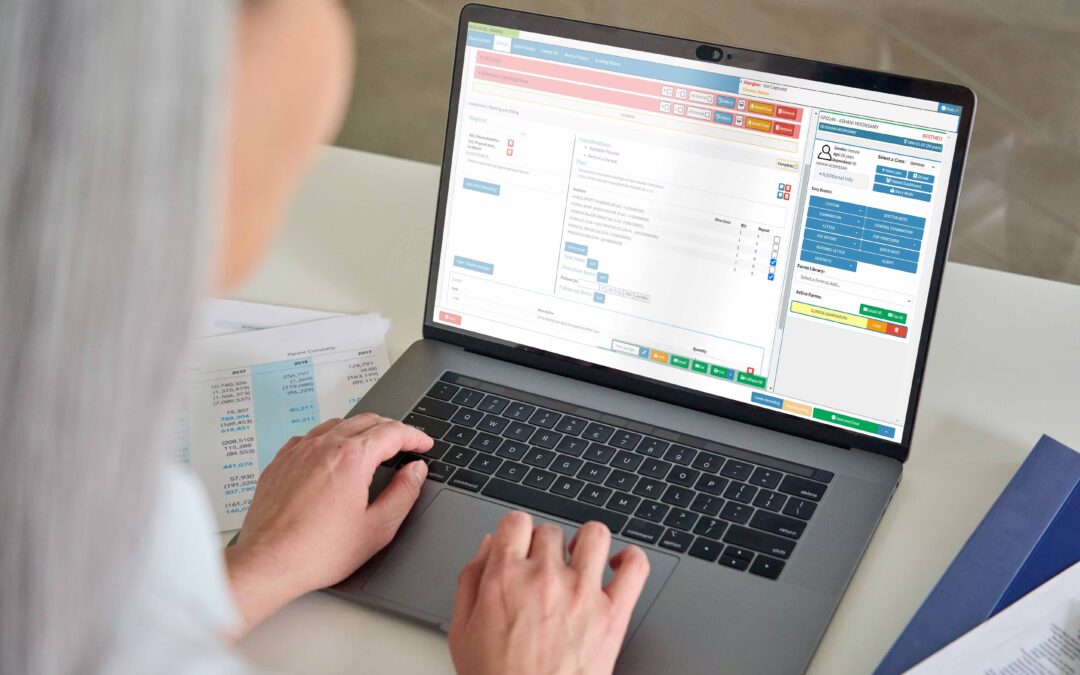
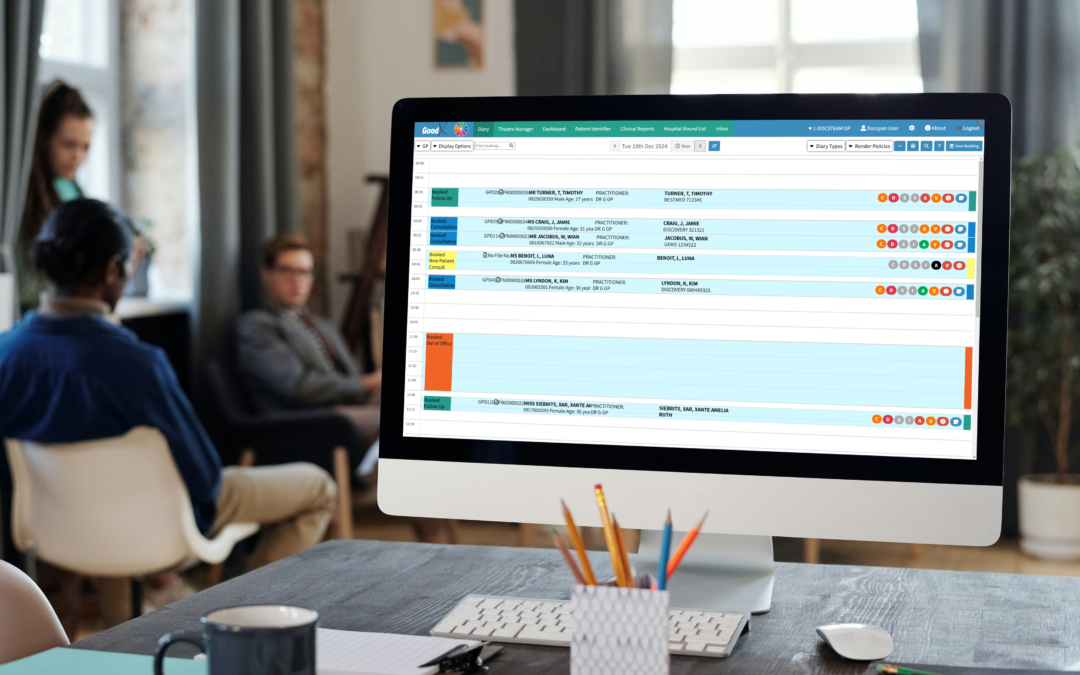
GoodX practice management software brings bookings, patient records, billing and claims into one place, so your new hire isn’t juggling spreadsheets, paper diaries and separate billing screens. When registration, medical aid details and accounts sit together, capture errors drop and training is faster. You can also ask candidates at interview whether they’ve used a similar system, and then show them yours during the practical test.
Reporting matters here too. With clear visibility of rejected claims, outstanding accounts and appointment patterns, you can judge a new receptionist on facts at the end of probation. [INTERNAL LINK: GoodX billing and claims features -> GoodX billing and claims page] help you see where errors start, and [INTERNAL LINK: appointment scheduling tools -> GoodX online booking page] help reduce double-booking and no-shows. Access controls and audit trails also support your POPIA obligations, because you can limit who sees what. If you want to know how your whole team can work from one record, see [INTERNAL LINK: clinical records and practice management -> GoodX practice management overview page].
Frequently Asked Questions
What is the most important question to ask a medical receptionist candidate?
Ask a scenario question about confidentiality, such as how they’d respond to a caller asking about another person’s visit. It tests judgement, POPIA awareness and honesty at once. A strong candidate refuses to disclose without consent and explains how they’d handle the caller politely.
Do medical receptionists need formal qualifications in South Africa?
No specific registration is required for reception staff, unlike clinicians who register with the HPCSA. Matric is the usual baseline. Experience in a medical setting, medical aid knowledge and billing familiarity often count for more than a certificate.
How can I test medical aid knowledge in an interview?
Give a short scenario: a claim is rejected because of an incorrect dependant code or lapsed authorisation. Ask what they’d check and who they’d phone. Candidates should mention verifying membership details, contacting the scheme and explaining any co-payment clearly to the patient.
How long should a probation period be for a new receptionist?
Three months is common and sensible. Set clear targets such as claim accuracy, booking errors and patient feedback, and review at four weeks, eight weeks and the end. Early feedback lets you correct problems before they become habits.
Should I run a practical test during the interview?
Yes. A ten to fifteen minute task, like capturing a mock patient registration or taking a phone booking, shows accuracy and manner under mild pressure. It also reveals how candidates respond to correction, which predicts how they’ll cope once hired.
Book your free GoodX demo
Hiring well is half the job; giving your receptionist tools that make accuracy easy is the other half. See how GoodX supports bookings, billing and records in one system by booking your free demo at goodx.co.za.
Disclaimer: This article is provided for general informational and educational purposes only. While GoodX Software takes reasonable care to ensure that the information is accurate and current at the time of publication, laws, regulations, industry standards, healthcare policies and technology may change. The content should not be regarded as medical, legal, financial or other professional advice. Readers should verify information relevant to their circumstances and consult an appropriately qualified professional where necessary. GoodX Software accepts no responsibility for decisions made or actions taken solely on the basis of this content.