The medical receptionist salary on your payslip is only about 75 to 85 percent of what the role costs you in a year. The rest hides in UIF and SDL contributions, leave, training, overtime, recruitment and the cost of replacing someone who walks out in month four. If you budget for the headline figure alone, you will be short by December.
I’ve sat in plenty of practice back offices where the receptionist’s pay was the one line nobody questioned and nobody planned. It was simply “what we paid the last person.” That’s a weak basis for a decision, because your front desk handles bookings, medical aid queries, patient payments and the first impression of your rooms all at once.
This article walks through how to put a realistic number on the role, what sits around the salary, and how to protect the investment once you’ve made it. Rates vary widely by province, practice size and experience, so treat any figure you read online (including ours) as a starting point to check against current local salary surveys and your own market.
Medical Receptionist Salary in South Africa: What Drives the Number
There’s no single national rate. A receptionist in a solo GP room in a smaller town will usually earn well below a colleague in a multi-doctor specialist practice in Sandton or Cape Town, and the gap is often bigger than owners expect. Check current job adverts in your area and ask your accountant or a local practice-management association what they’re seeing before you set an offer.
Several things move the figure. Experience with medical aid billing is the big one, because someone who understands tariff codes, ICD-10 coding and scheme rules can save you more than they cost. The World Health Organization’s ICD classification is the foundation of the diagnosis codes your claims depend on, and a receptionist who gets them wrong creates rejections you then pay to fix.
Other drivers are simpler. Multilingual ability matters in many areas. So does comfort with software, handling difficult patients, and working for a specialist whose admin is heavier than a GP’s. Hours count too: a practice open until 7pm or on Saturdays will pay more, or pay overtime, or both.
One more point on the minimum wage. Whatever you offer must at least meet the national minimum wage and the Basic Conditions of Employment Act requirements, so confirm the current figures with the Department of Employment and Labour or your payroll provider before you finalise a contract.
The True Cost of Employing a Medical Receptionist
The cost of employing a medical receptionist goes well beyond monthly pay. Think of it in layers, and put a rand figure against each one before you advertise the post.
Start with the statutory layer: employer UIF contributions, the Skills Development Levy if you’re above the payroll threshold, and Workmen’s Compensation (COIDA) registration. Then add the contractual layer: a 13th cheque if you offer it, leave pay, sick leave, and any medical aid or retirement fund contribution. Finally, there’s the hidden layer, which is where budgets quietly break.
- Recruitment time or agency fees
- Training and the weeks it takes a new person to reach full speed
- Overtime and load-shedding disruption
- Equipment, software access and uniform
- Cover during leave and sick days
That hidden layer is dominated by turnover. Physicians Practice suggests that annual turnover of 15 percent or less is reasonable, while 20 percent or more signals a problem. The AAFP’s retention research makes the same point about how disruptive a 20 percent rate is for a clinic, and some practices see far worse.
For a one-receptionist practice, 20 percent turnover is not a statistic. It means a new person every five years on average, but in reality it often looks like two departures in two years and then a long calm. Each exit means advertising, interviewing, training and a dip in collections while the new hire learns your medical aid mix.
Here’s a rough way to test your own numbers. Take the annual cost to company, add an estimate for recruitment and training (many owners find it lands around one to three months of salary once lost productivity is counted), and divide by twelve. That’s the monthly figure to hold in your head, not the payslip amount.
How to Budget for Practice Staff Without Guesswork
To budget for practice staff properly, build it from the bottom up instead of copying last year. Open your payroll records and list every cost attached to the front desk: salary, statutory contributions, leave liability, training, overtime and software seats. Then compare the total against practice income so you can see front desk staff costs as a percentage of revenue.
A useful discipline is to review that percentage quarterly. MGMA’s guidance on practice financial metrics is a good prompt for which numbers to track, and the principle travels well even though the benchmarks come from the United States. Don’t import their percentages into your budget, but do borrow the habit of measuring.
Next, decide what the role earns back. A receptionist who collects at the time of service and chases unpaid accounts is not just a cost. Physicians Practice reports that monitoring collections daily can lift collections by about 10 percent, and role-playing payment conversations with front-desk staff helps them ask confidently. Even if your own lift is half that, it changes the maths on what you can afford to pay.
Plan for a raise cycle as well. An annual increase that tracks inflation and performance is cheaper than a surprise resignation. And keep a small reserve, perhaps a month of cost to company, for the unplanned: a resignation, a maternity leave period, or a locum while you recruit.
Your broader financial planning belongs in the same conversation. Medical Economics has a useful piece on building a strategic business plan, and staffing should be a named line in whatever plan you write. Likewise, medical practice payroll should sit in your monthly management accounts, not in a drawer until tax season.
Hiring a Receptionist for a Doctor’s Practice and Keeping Them
Hiring a receptionist for a doctor’s practice is a cultural decision as much as a skills one. Medical Economics recommends assessing fit and involving current staff in interviews, and I agree. A nurse or practice manager will spot in ten minutes what a CV never shows: how the candidate speaks to an anxious person.
Test the real job. Ask candidates to handle a role-played call from a patient whose medical aid has just declined a claim, or to book three overlapping doctors into one diary. You’ll learn more from that than from any list of references.
Then onboard properly. A written first-week plan, a named mentor, a review of your POPIA obligations and hands-on time with your systems should be standard. The Information Regulator enforces the Protection of Personal Information Act, and your front desk handles patient information more than anyone else in the building, so privacy training is not optional. Professional expectations around confidentiality also flow from the HPCSA’s ethical rules, which bind you as the practitioner even when the breach is a receptionist’s.
Keeping people costs less than replacing them. MGMA’s front-desk retention tactics lean on recognition, clear growth paths and fair workloads. Small things count: flexible hours where the diary allows, a short exit or stay interview each year, and a greeting standard that makes staff proud of the desk, much like the front-desk improvements MGMA describes in its patient communication work.
Where GoodX Fits Into Your Front Desk Budget
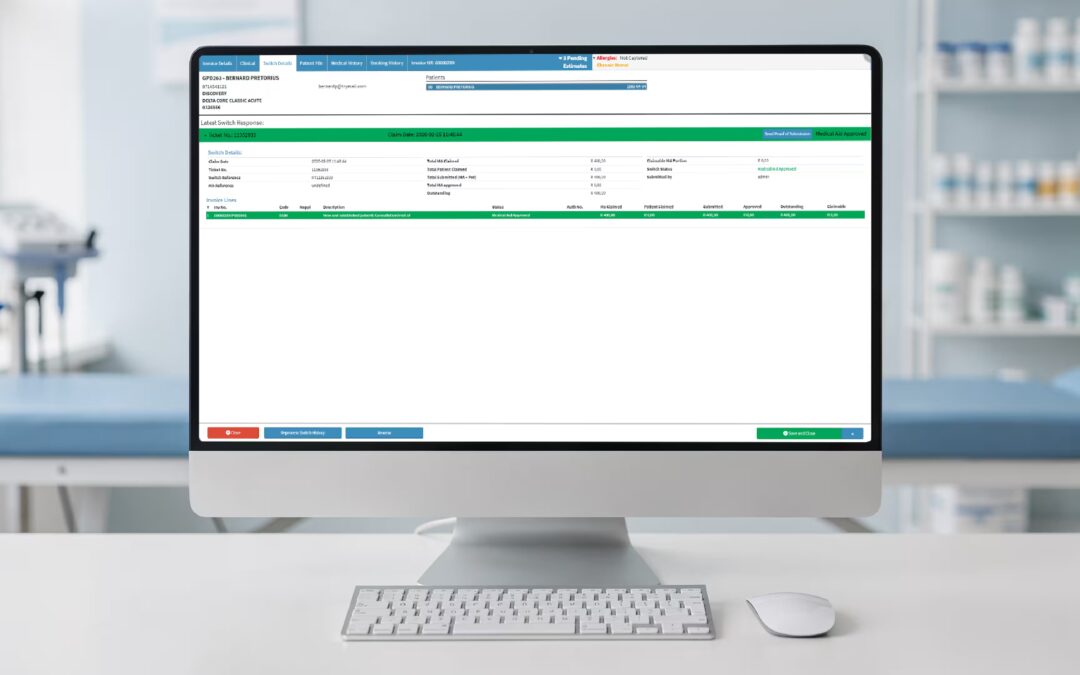
Software won’t replace your receptionist, but it changes what you’re paying them to do. When bookings, patient records, billing and claims live in one system, your receptionist spends less time retyping, searching for files and phoning to confirm things that automation could handle.
GoodX practice management software supports the work that most often eats front desk hours: appointment scheduling, patient records, billing, medical aid claims and reporting. Faster, cleaner claims mean fewer rejections to rework, and reporting gives you a clear view of collections so you can see whether your front desk is paying for itself. [INTERNAL LINK: practice management features -> GoodX practice management software page]
It also helps with training. A receptionist who learns one consistent system gets up to speed sooner, which shortens that costly gap after a new hire. Claims run against Council for Medical Schemes regulated schemes, so accuracy at the desk matters, and good tools support it rather than leaving it to memory. [INTERNAL LINK: billing and claims -> GoodX billing and medical aid claims page]
Frequently Asked Questions
How much should I budget for a medical receptionist in South Africa?
Budget for the full cost to company, not just the salary. Add UIF, SDL where applicable, COIDA, leave, any 13th cheque, training and recruitment. A sensible rule is to add roughly 15 to 25 percent to the gross salary, then confirm with your accountant.
Does experience with medical aid billing change the salary?
Yes, usually upwards. A receptionist who understands tariff codes, ICD-10 coding and scheme rules reduces rejected claims and shortens payment cycles. That skill often pays for itself, so many practices accept a higher salary for it, especially in multi-doctor or specialist rooms.
What is a healthy staff turnover rate for a practice?
Aim for 15 percent or lower. Sources such as Physicians Practice treat 20 percent or more as a warning sign. In a small practice with one receptionist, even a single resignation can disrupt collections and patient experience, so track exits and ask why people leave.
Should I hire a full-time or part-time receptionist?
It depends on your opening hours and patient volume. A busy multi-doctor practice usually needs full-time cover, while a solo practitioner with quiet afternoons may manage with part-time hours plus automated bookings. Map your peak times first, then match the roster to them.
Can software reduce my front desk staff costs?
It can reduce the admin load, which lets one person handle more with fewer errors. Online bookings, digital records and automated billing cut repetitive tasks. It won’t remove the need for a skilled receptionist, but it can improve how their time is spent.
Book your free GoodX demo
If you’d like to see how GoodX can take pressure off your front desk and give you clearer numbers on staffing and collections, book a free demo. Our team will walk you through the system using your own practice workflows. Start at goodx.co.za.
Disclaimer: This article is provided for general informational and educational purposes only. While GoodX Software takes reasonable care to ensure that the information is accurate and current at the time of publication, laws, regulations, industry standards, healthcare policies and technology may change. The content should not be regarded as medical, legal, financial or other professional advice. Readers should verify information relevant to their circumstances and consult an appropriately qualified professional where necessary. GoodX Software accepts no responsibility for decisions made or actions taken solely on the basis of this content.