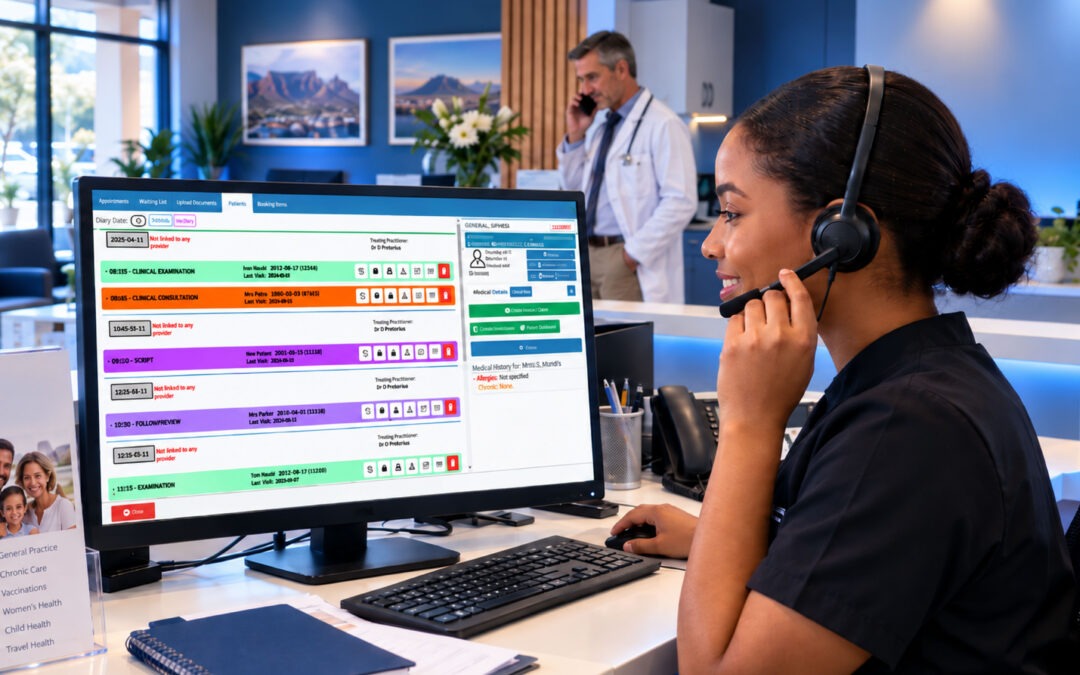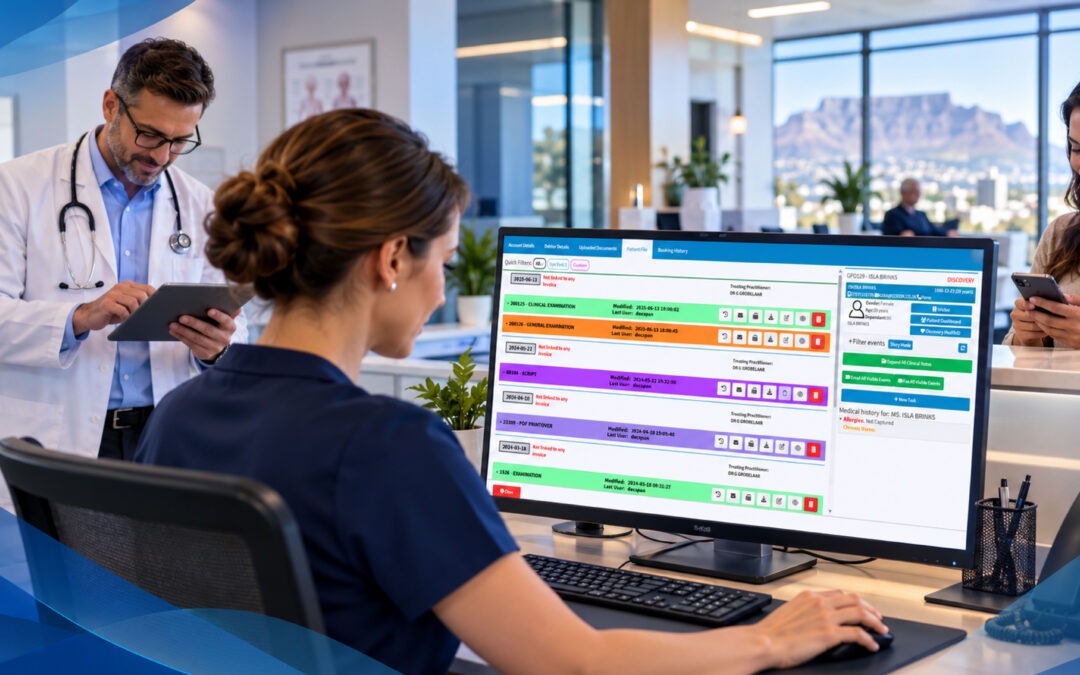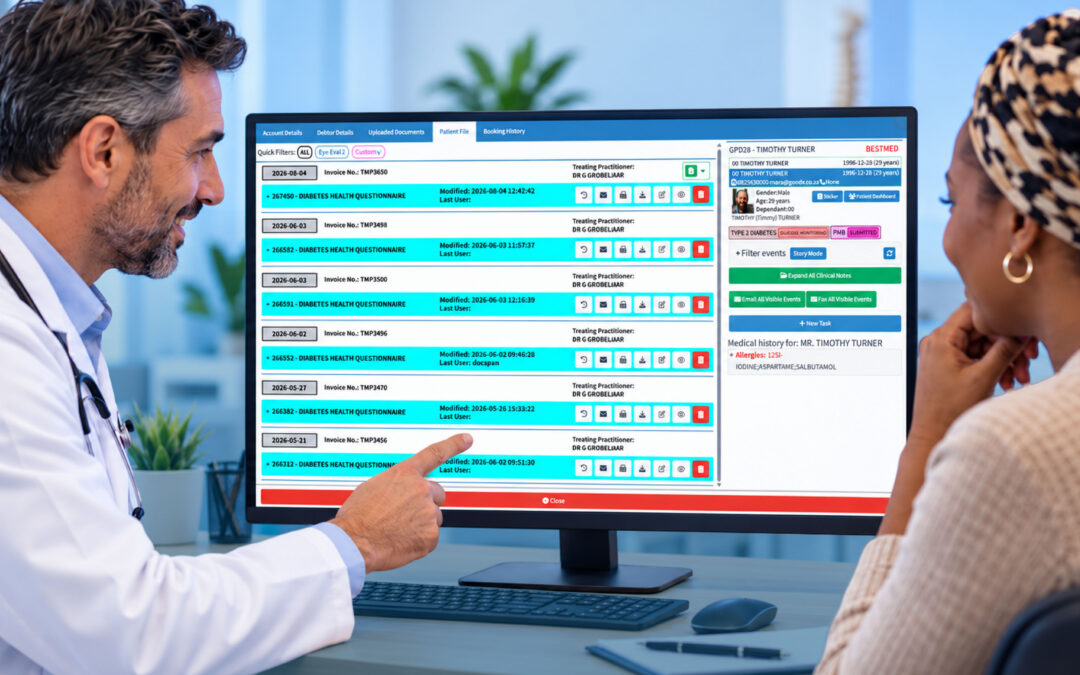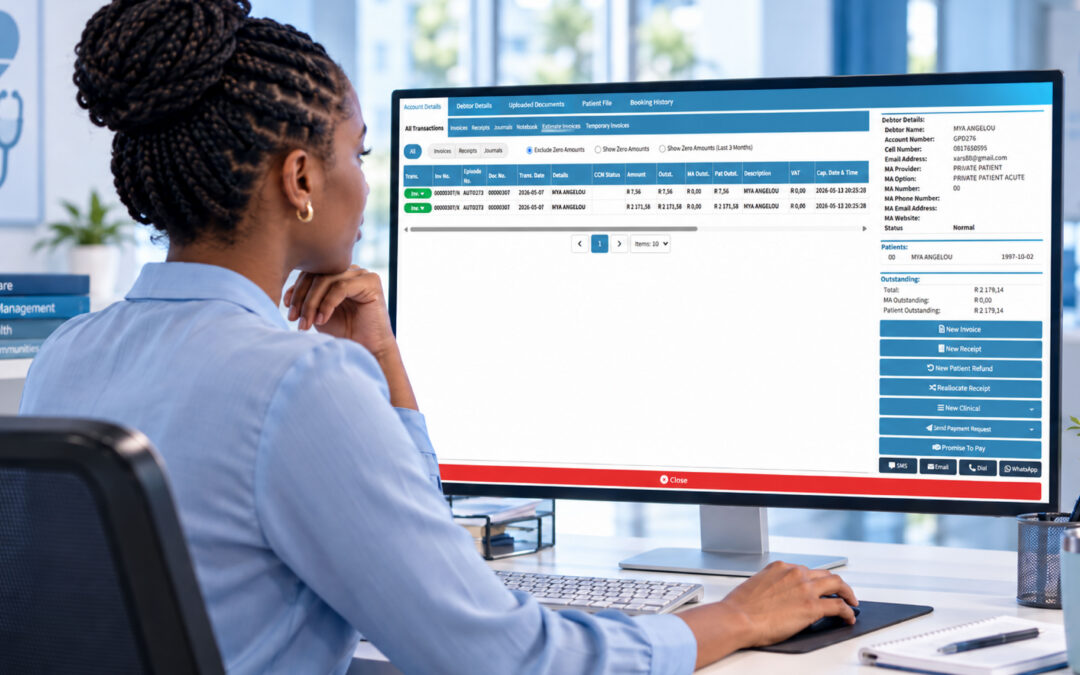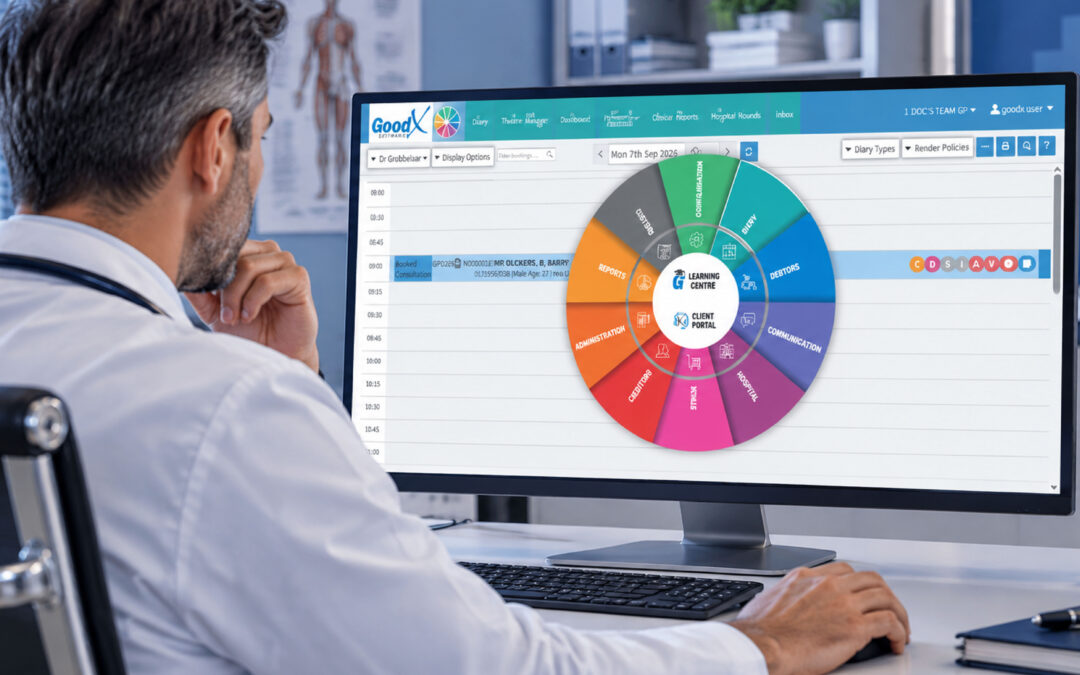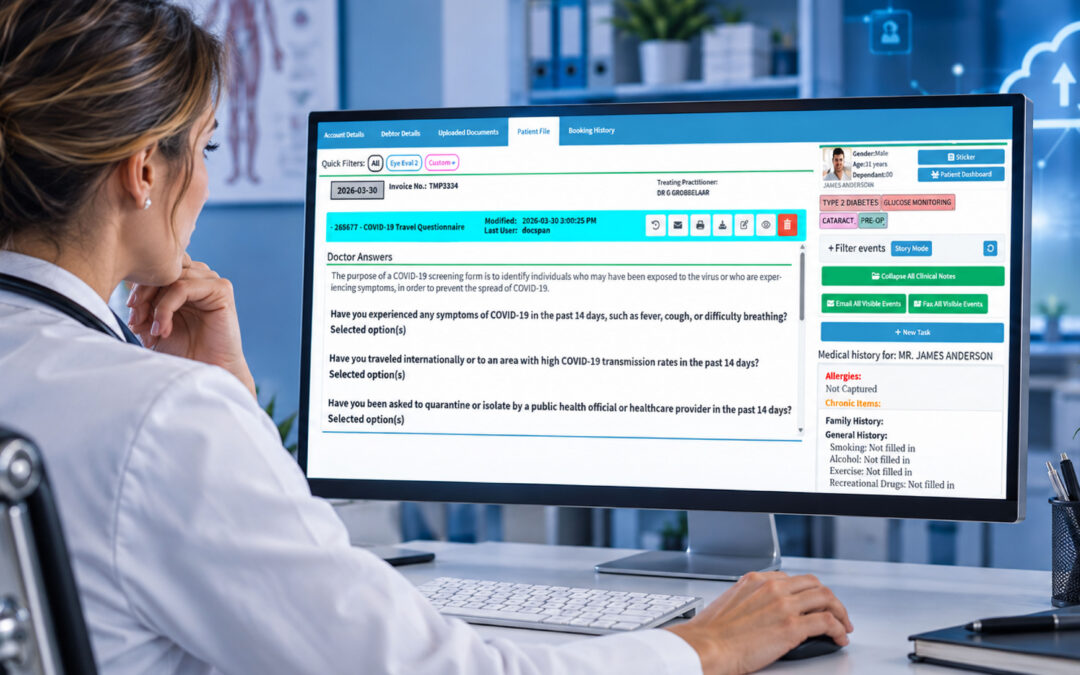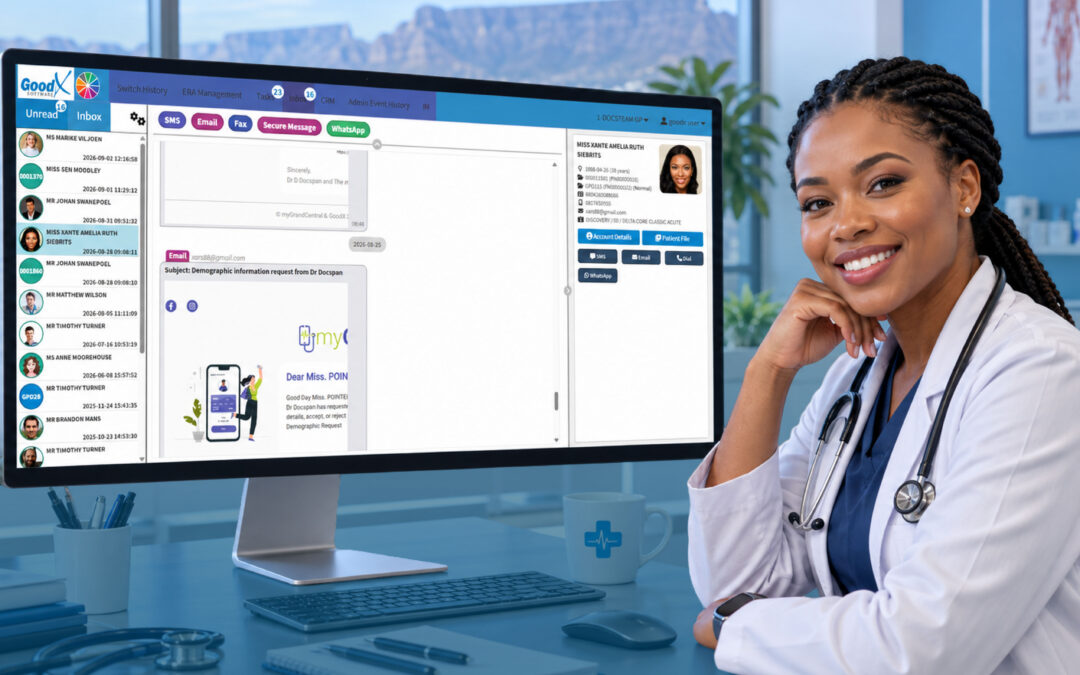
Picture this: an OHSC inspector, a Department of Employment and Labour inspector, or a request from the Information Regulator arrives at your practice with no warning. Could your Receptionist or Practice Manager find every policy, safety file and consent form in the next five minutes?
For most doctors, practice managers, or Receptionists, the honest answer is “not immediately.” That’s not because anyone is careless, it’s because medical practice compliance in South Africa means satisfying at least three separate regulators, each with its own paperwork trail, and almost none of it lives inside the medical software you use day to day.
Three regulators, one filing cabinet
The Office of Health Standards Compliance (OHSC) regulates not only hospitals, but private clinics and doctors’ practices too, assessing standards that range from patient rights and clinical governance to facilities and infrastructure. According to the Office of Health Standards Compliance, it carried out close to 800 inspections in 2023/24 alone and issued 45 written warnings to establishments that could not show compliance. The OHSC has also been working with general practitioners on inspection tools for doctors’ practices, so GP rooms are firmly on its radar.
The Department of Employment and Labour enforces the Occupational Health and Safety Act, the Compensation for Occupational Injuries and Diseases Act, and basic labour law. As the Department of Employment and Labour stresses, employers carry the legal duty to provide a safe working environment. Its inspectors can walk in unannounced and ask, on the spot, for attendance registers, safety policies, first-aid records, and proof of UIF and COIDA payments.
Then there is the Information Regulator, which polices POPIA. Patient records count as “special personal information” under the Act, and healthcare providers carry specific duties around consent, security safeguards, and breach notification. This is not theoretical: the Regulator fined a pathology laboratory R100,000 after it failed to secure patient data and notify the people affected, and new regulations on processing data subjects’ health information took effect in March 2026.
None of this is unique to South Africa. European regulators have fined hospitals hundreds of thousands of Euros for failures in how they protect and account for patient data. Regulators want to see evidence, not promises.
Where GoodX comes in
This is the gap GoodX’s compliance tools are built to close: a Personnel Platform paired with a Compliance & Risk Manager. You don’t have to be a current GoodX client to benefit from these tools, you can use the software only for your compliance requirements. If you are an existing GoodX client, you can add these tools. [INTERNAL LINK: explore GoodX compliance tools -> GoodX Compliance & Risk Manager page]
What is a Personnel Platform and Compliance & Risk Manager?
Think of the Personnel Platform as a secure online filing cabinet for your practice. It’s one place where all your staff and compliance documents live, things like policies, procedures, HR forms, training certificates and compliance records. Instead of digging through emails, shared drives or an actual filing cabinet, you or your staff can log in and find the right document in seconds. [INTERNAL LINK: see how the GoodX Personnel Platform works -> GoodX Personnel Platform page]
The Compliance & Risk Manager works alongside it, like a running checklist for your practice. It lays out everything you’re required to have in place, tracks what’s been done, flags what still needs attention, and helps you monitor risks before they become problems. It can also remind you when routine tasks fall due, for example, when your fire extinguishers need their next service, or when a piece of medical equipment is due for calibration or maintenance, so these things don’t quietly slip past unnoticed.
Together, they mean your practice always knows what it needs to comply with, when it’s due, and exactly where the proof of that lives.
Why do you need a Personnel Platform and Compliance & Risk Manager?
The healthcare industry is inundated with compliance requirements, and managing them and storing documents can be a massive headache if done manually. As a result, most practices overlook compliance areas that don’t directly affect their ability to practise.
When considering compliance in the healthcare practice, several acts and regulations immediately come to mind. For example, the requirements of POPIA, our labour laws and the accreditation of all healthcare facilities by the Office of Health Standards Compliance, not just hospital facilities, must be managed with due diligence.
How it works in practice
Every requirement tracked in the Compliance & Risk Manager can include supporting evidence: a signed policy, a training certificate, a risk assessment, a consent form, a service certificate. Instead of that evidence living in a drawer, an inbox, or on someone’s personal laptop, it is attached directly to the relevant requirement, and that attachment points straight to the actual document sitting securely in your Personnel Platform. When it is time for a review, a renewal, or an unannounced visit, you, your Practice Manager, or Receptionist open the module, click the requirement, and the supporting document is right there.
This does not remove the responsibility to actually meet each requirement; that still rests with you and your team. What it does remove is the hunt: the frantic search through filing cabinets and shared drives while an inspector waits in reception, and the quiet uncertainty about what might have been missed.
Less admin, fewer surprises
For doctors, this means less time lost to paperwork and more time with patients. For Practice Managers and staff, it means one place to keep documentation current, instead of chasing signatures and expiry dates across several systems. For the practice as a whole, it means you can walk an inspector through what is in place, calmly and clearly, whichever regulator happens to be at the door.
Compliance in healthcare is not going away. As the OHSC extends its inspections to private practices and the Information Regulator sharpens its enforcement, it will only matter more. GoodX’s Personnel Platform and Compliance & Risk Manager are built to make staying on top of it manageable, so your practice is ready, not scrambling, whenever that knock comes.
Not sure where to start? GoodX can help by drafting SOPs and documentation templates for your practice, so you’re not building your compliance library from a blank page. [INTERNAL LINK: get help with SOPs and compliance templates -> GoodX Compliance Services page]
Frequently Asked Questions
Which regulators can inspect a medical practice in South Africa?
At least three. The Office of Health Standards Compliance oversees health establishment standards, the Department of Employment and Labour enforces occupational health and safety and labour law, and the Information Regulator enforces POPIA. Each expects different documentation, so practices need a way to produce all of it quickly.
Can labour inspectors arrive without notice?
Yes, Department of Employment and Labour inspectors can visit unannounced. They may ask on the spot for safety policies, attendance registers, first-aid records and proof of UIF and COIDA payments, so these documents need to be current and easy to find at any time.
Do I need to be a GoodX client to use the Personnel Platform and Compliance & Risk Manager?
No. The tools can be used on their own purely for your compliance requirements, without using GoodX for billing or clinical records. Existing GoodX clients can simply add them to their current setup.
What’s the biggest mistake practices make with compliance?
Treating it as a filing task rather than an ongoing process. Practices often have the right documents somewhere but lose track of expiry dates, service schedules and renewals, which only surfaces when an inspector asks for something that has quietly lapsed.
Does compliance software make my practice compliant automatically?
No. Software can track requirements, store evidence and remind you when tasks fall due, but meeting each requirement is still your team’s responsibility. What good software does is make gaps visible early and let you prove compliance quickly when asked.
Book your free GoodX demo
Feeling ready to take control of compliance? Book a free demo at goodx.co.za or contact GoodX for assistance at compliance@goodx.co.za, and see how your policies, staff records and compliance evidence can live in one place.
Disclaimer: This article is provided for general informational and educational purposes only. While GoodX Software takes reasonable care to ensure that the information is accurate and current at the time of publication, laws, regulations, industry standards, healthcare policies and technology may change. The content should not be regarded as medical, legal, financial or other professional advice. Readers should verify information relevant to their circumstances and consult an appropriately qualified professional where necessary. GoodX Software accepts no responsibility for decisions made or actions taken solely on the basis of this content.